Breast cancer is the most common type of cancer in women, especially in India. Now we are witnessing it in younger women than ever before. Yet in my 18 years of experience, most women hesitate to even come for checkup as a result they come in later than they should have. The main reason being that most women simply don’t know what to watch for and the other reason maybe is their fear of what they might find out.
This blog addresses the common doubts related to breast cancer like what Breast Cancer Screening actually involves, how to do a proper breast self-exam and why finding something early changes everything about what comes next.
What Finding It Early Actually Means
Let’s start with the reason why early detection matters. When we catch breast cancer in early stage or stage 1, then it means the tumour is still small and hasn’t spread beyond the breast tissue and in cases like this nine out of ten women diagnosed at this stage are still alive and well and most go on to live completely normal lives.
But when that same cancer is found at stage IV, in most cases it has already spread to the bones or liver and even in lungs. At this stage the treatment becomes more complex. It becomes about control, about managing a disease that has now taken root in multiple places. The conversations in my clinic at that stage are very different ones and honestly, they’re harder for everyone involved.
Early detection doesn’t just improve survival odds. It also changes what treatment has to look like. All of that depends on one thing: finding the cancer before it’s had the time and opportunity to grow and travel.
Breast Cancer Screening: What It Is and Why It Isn’t Optional
The whole point of Breast Cancer Screening is to find something before the body has started giving signals, because by the time symptoms appear, the disease has usually been there for a while already.
I know the word screening sounds clinical and a bit intimidating. It doesn’t have to be. Think of it as giving your body a regular check-up before it has any reason to complain.
The Mammogram
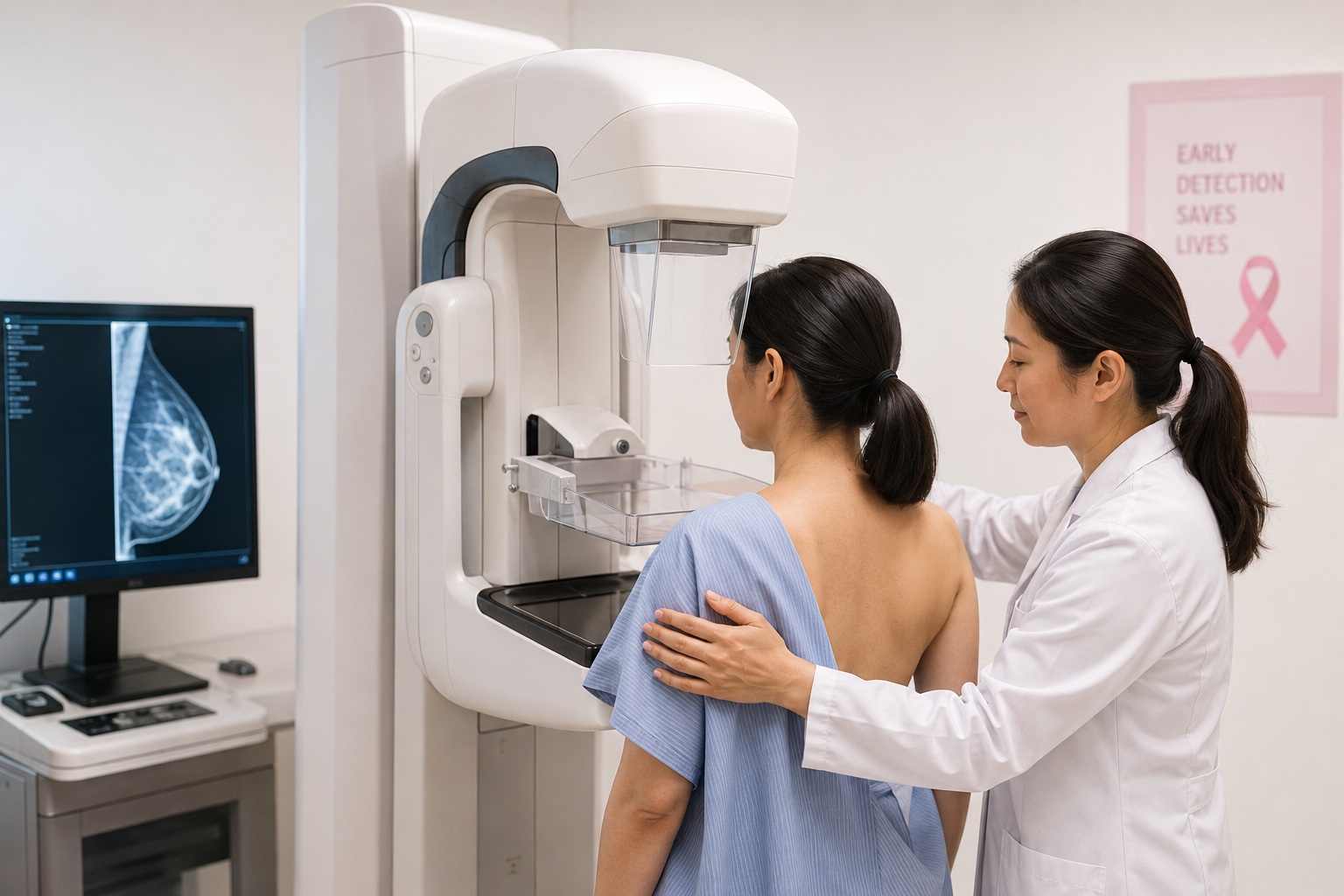
The mammogram is the main screening tool and it’s the one I recommend most often. It’s a low-dose X-ray of the breast that picks up tiny calcium deposits called microcalcifications, along with small masses, long before they’re big enough to feel with your hand. Women at average risk should have this done annually from the age of forty.
Women with dense breast tissue, which is quite common and entirely normal, may find that a mammogram alone isn’t enough. Dense tissue and tumour tissue can look similar on an X-ray. For these women, adding an ultrasound or an MRI is often the right approach and I discuss this openly with each patient based on what their imaging actually shows.
When MRI Becomes Part of the Plan
Breast MRI is the most sensitive tool we have. It picks up cancers that other methods can miss, particularly in high-risk women. If you carry a BRCA1 or BRCA2 gene mutation, if multiple close relatives have had breast or ovarian cancer, or if you received chest radiation therapy before the age of thirty, MRI should be part of your regular screening alongside mammography.
How Often and Starting When
There’s no single answer that works for everyone. Average-risk women typically go for annual or biennial mammograms from forty onwards. High-risk women start earlier and often screen more frequently. The right schedule is something I work out with each patient individually, taking into account family history, personal history, breast density and any genetic information we have. If you’re not sure what applies to you, that’s exactly what a consultation is for.

How to Do a Breast Self-Exam Properly
A Breast Self-Exam isn’t a substitute for mammography. The first self exam is the step towards building awareness about breast cancer. One can do it in the privacy of their own home with basic knowledge about how a breast self exam looks like.
When to Do It
Once a month is the right frequency. For women who are still menstruating, do it about a week after your period ends. At that point in your cycle, the breasts are least swollen and tender, so you get a clearer picture of what’s actually there. If you’re postmenopausal, just pick a date you can remember, the first of the month works well and stay consistent.
The Actual Technique
Stand in front of a mirror with your arms down. Look at both breasts without touching them first. You’re checking for any visible changes in size or shape, any skin that looks dimpled or pulled, any change around the nipple. Then lift both arms overhead and look again. The tissue stretches differently in this position and can reveal changes that weren’t obvious at rest.
Next, lie down and use the flat pads of your three middle fingers, work in small circular motions starting from the outer edge of the breast and spiralling inward, or move in vertical strips from the armpit to the middle of the chest and back again. Cover the entire area, including the armpit itself, where breast tissue extends and where lymph nodes sit.
Apply three levels of pressure as you go: light, medium and firm. Each level tells you something different about the layers of tissue beneath.
Finish by gently squeezing the nipple. Any discharge that appears without squeezing, or that’s bloody or clear rather than milky, is worth reporting to a doctor. Don’t panic, but don’t ignore it either.
Changes That Need Medical Attention
A new lump or area of hardness that wasn’t there before. Any shift in breast size or shape with no obvious explanation. Skin that has developed a rough, dimpled texture. A nipple that has recently pulled inward or become crusty at the edges. None of these automatically means cancer. But all of them mean you need to come in and get checked. Sooner rather than later.
What Happens During a Clinical Breast Examination
When you come to see me, or any surgeon, for a clinical breast examination, we’re doing something more thorough than a self-exam allows. We examine the breast tissue systematically, assess the texture and mobility of anything we find and check the lymph node regions under the arm and near the collarbone. We also look for skin and nipple changes that can sometimes be subtle enough to miss on your own.
Women in their twenties and thirties should have this done by a doctor every one to three years. From forty onwards, I recommend it annually, alongside a mammogram. And if you find anything during a self-exam at any age, don’t wait for your annual appointment. Come in. That’s always the right call.
The Reasons Women Delay and What I Want to Say About That
I hear the same explanations regularly. I was busy. I didn’t think anything was wrong. I was scared of what they might find. The mammogram is uncomfortable. I thought I was too young.
I understand every single one of these. None of them is unreasonable. But I want to be honest with you about what delaying costs.
Fear of finding cancer is perhaps the most common reason women avoid screening. But here’s the thing: avoiding a test doesn’t reduce your chance of having cancer. It only reduces your chance of catching it when treatment is straightforward and outcomes are good.
The idea that no symptoms means no problem is something I want to address directly. In its early stages, breast cancer is almost always silent. No pain. No visible change. No lump you can feel. That’s precisely what window screening is designed to catch. By the time symptoms appear, the cancer has usually been growing for some time already.
And yes, mammograms are uncomfortable. The compression is brief and not pleasant, I won’t pretend otherwise. But it lasts seconds. What comes with a late diagnosis lasts far, far longer.
Lifestyle and Breast Health: What Actually Helps
Screening catches what’s already there. But there are things you can do to lower the chances of cancer developing in the first place.
- Regular exercise consistently shows up in the research as protective against breast cancer, particularly the hormone-driven types. It doesn’t have to be intense. Thirty minutes of walking most days of the week appears to make a real difference.
- Keeping a healthy weight after menopause matters too. Fat tissue produces oestrogen and higher oestrogen levels over time are linked to hormone-receptor-positive breast cancers. This isn’t about being thin. It’s about reducing an unnecessary hormonal burden on the body.
- Alcohol is a direct, dose-related risk factor for breast cancer. The evidence on this is consistent across large studies. Even moderate drinking raises risk modestly.
I want to be honest here: none of this offers a guarantee. Women who exercise regularly, maintain a healthy weight and never drink alcohol still develop breast cancer. These are risk reduction measures, not prevention certainties. But they’re worth doing, both for breast health and for your general wellbeing and they work best alongside consistent screening.
Final Thoughts
Regular Breast Cancer Screening, a monthly Breast Self-Exam and a yearly visit to your doctor for a clinical examination aren’t complicated things. They take very little time. What they give back is the chance to find something early, when treatment is simpler, recovery is faster and the odds are genuinely in your favour.
If you haven’t had a mammogram in the past year, please schedule one. If you’re not sure whether your age or history means you should be screening, then make an appointment at https://drpallabsahasurgeonkolkata.in/ , That conversation takes thirty minutes and could matter more than you know.
Your health is worth that appointment.
Frequently Asked Questions
1. At what age should I start breast cancer screening in India?
For women in their 20s and 30s a manual checkup in 1-3 years is preferred and annual mammography from age forty for most women.
2. How often should I do a breast self-exam?
Once a month. A week after your period if you’re still menstruating, or any fixed date each month if you’re postmenopausal.
3. I felt a lump during my self-exam. Should I be panicking?
No. Most lumps are benign, things like cysts or fibroadenomas. Just don’t wait to get it checked.
4. Is mammography safe? I’ve heard concerns about radiation.
Yes. The dose is roughly what you’d get from a short flight. The benefit of early detection far outweighs that small exposure.
5. My report says I have dense breasts. What does that mean for me?
It’s common, not a disease. It just means that the doctor may add an ultrasound or MRI, since dense tissue can hide things on a mammogram alone.
📞 Phone: (+91) 9830088321
🌐 Website: https://drpallabsahasurgeonkolkata.in/
📧 Email: drpallabsaha20@gmail.com